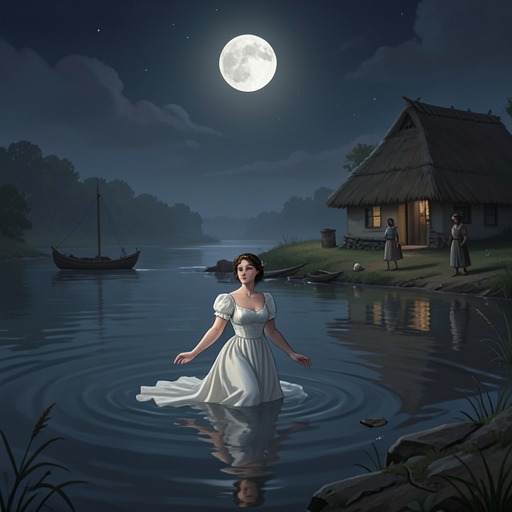
the river boat
The God of Small ThingsThe river boat is a modest object with an outsized place in the story: it belongs to the children’s everyday world, yet its night crossings help expose the secret that will destroy the fragile ties around them. Shared by Estha and Rahel in daylight and used by Ammu to reach Velutha at night, the boat carries play and forbidden intimacy across the same stretch of water.
A Craft in the Children’s World
The twins’ connection to the boat is established through their closeness to Velutha. They have only recently arrived in Ayemenem with Ammu and are too young to remember him from before his return, but in the months since, they have become his best friends. Although they are forbidden to visit his home, they go anyway, running the three minutes through the coconut trees to the little laterite hut where Velutha lives with Vellya Paapen and Kuttappen. The boat belongs to this wider landscape of their unsanctioned visits and shared discoveries.
Velutha teaches Estha and Rahel practical skills as well as offering them his company. They sit among the wood shavings while he shows them how to use a planer; he also makes Rahel her luckiest-ever fishing rod and teaches both children to fish. The river boat is similarly associated with what they do together: Ammu thinks of it as the boat her children use by day, a familiar part of their childhood before its other use comes to light.
Daylight Use and Night Crossings
The boat’s importance shifts when it becomes part of Ammu and Velutha’s secret. Ammu’s love for him grows out of the contradictory forces inside her: the tenderness of motherhood and an untamed, reckless anger at the life imposed on her. The story connects that emotional conflict to two linked acts of crossing boundaries: at night, she loves the man her children love by day, and she uses the boat they use by day. The same craft therefore links the children’s affection for Velutha with their mother’s hidden relationship to him.
The movement between night and day gives the boat a double life. For the children it is associated with ordinary companionship and the river; for Ammu it is part of a clandestine passage toward Velutha. This reuse does not make the boat itself a declaration or explanation. Its significance comes from the contrast between the children’s open, permitted affection for Velutha and Ammu’s concealed adult love, which crosses boundaries that the household and caste order will not accept.
Discovery and Consequence
Vellya Paapen learns the truth by watching the boat. Night after night, he sees a little boat rowed across the river and sees it return at dawn. Only after witnessing these repeated crossings does he understand what his Untouchable son has done: Velutha has entered and loved Ammu. The boat’s passage is thus not a single accidental sighting but a recurring pattern that turns secrecy into knowledge.
Terrified by what he has witnessed, Vellya Paapen goes to Mammachi and tells her. He weeps, shakes, and asks God to forgive him for having fathered a monster; he even offers to kill his son with his own hands. The boat has not caused the lovers’ relationship, but its visible crossings make that relationship legible to a witness who understands it as a catastrophic violation. Baby Kochamma hears the disturbance and secretly rejoices at the prospect of the trouble ahead, showing how the revelation is received not only as a family crisis but also as an opportunity.
Narrative Significance
The river boat binds together a set of relationships that the story’s social rules keep apart. It carries the twins into Velutha’s world through their affection and curiosity, while its night journeys expose Ammu’s intimacy with him. The object is at once ordinary and consequential: a boat used by children in the day becomes evidence of a forbidden relationship when seen moving across the river after dark.
That contrast makes the craft a precise image of the boundary-crossing at the heart of these events. The children’s visits to Velutha are forbidden but affectionate; Ammu’s love is secret and dangerous. The boat connects those forms of closeness without making them equivalent, and its repeated return at dawn marks the point at which a private relationship can no longer remain private. Through the boat, the river becomes more than a setting: it is a route shared by the innocent habits of childhood and the concealed crossing that gives Vellya Paapen the knowledge he brings to Mammachi.